MOUNT KILIMANJARO · MARANGU ROUTE
MARANGU ROUTE: Climb with Comfort of Mountain Huts
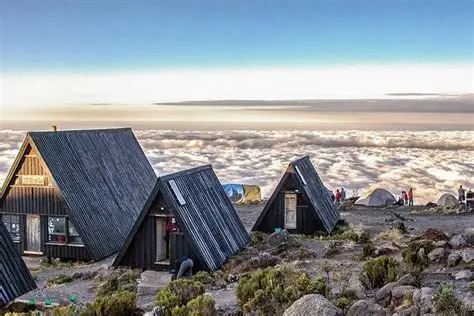
Journey up Kilimanjaro’s southeastern slopes through lush rainforest, open moorland and the stark alpine landscape beneath the summit. The Marangu Route is known for its permanent mountain huts, offering a different experience from Kilimanjaro’s tent-based climbing routes.
- Duration: 5-6days
- Accommodation: Permanent mountain huts
- Difficulty: Challenging
ROUTE GLANCE
Marangu Route at a Glance
The Marangu Route approaches Kilimanjaro from the southeast. Climbers follow the same main trail up and down the mountain, staying in permanent huts along the route.
KEY HIGHLIGHTS
- Starting point: Marangu Gate
- Trekking duration: Commonly 5 or 6 days
- Accommodation: Permanent mountain huts with shared sleeping and dining facilities
- Difficulty: Challenging because of altitude, consecutive trekking days and the summit attempt
- Main landmarks: Mandara Hut, Horombo Hut, Kibo Hut, Gilman's Point, Stella Point and Uhuru Peak
DECISION TIME
Is the Marangu Route Right for You?
Marangu offers a different style of Kilimanjaro trekking. Instead of sleeping in tents, climbers stay in permanent mountain huts, sharing sleeping and dining facilities with other trekkers.
You may prefer Marangu Route if you
- Prefer sleeping in huts rather than camping in tents..
- Want a route with established overnight stops.
- Enjoy walking through rainforest, moorland and alpine desert..
- Prefer an ascent and descent that follow the same main trail.
- Can choose an itinerary that provides appropriate time for acclimatization.
What should you consider before choosing it?
- Altitude: The summit is 5,895 metres above sea level, and altitude illness can affect even physically fit climbers.
- Acclimatisation time: The 5-day itinerary has a faster ascent schedule than the 6-day version that adds a day at Horombo Hut.
- Summit day: Reaching Uhuru Peak involves a demanding ascent followed by a long descent.
- Shared accommodation: Huts provide shelter, but sleeping and dining spaces are shared rather than private hotel rooms.
- Route variety: Because the main trail is used for both ascent and descent, you revisit much of the same terrain on the way down.
A Journey Through Kilimanjaro's Changing Landscapes
The Marangu Route takes climbers through several distinct ecological zones as the trail climbs from the mountain’s lower slopes towards Uhuru Peak.
Begin in the rainforest
After registration at Marangu Gate, the trail enters montane rainforest. Expect a greener, more sheltered environment, with forest vegetation, birds and the possibility of seeing monkeys along the way.
The first day’s walk leads towards Mandara Hut, where climbers spend their first night on the mountain.
Walk into the moorland
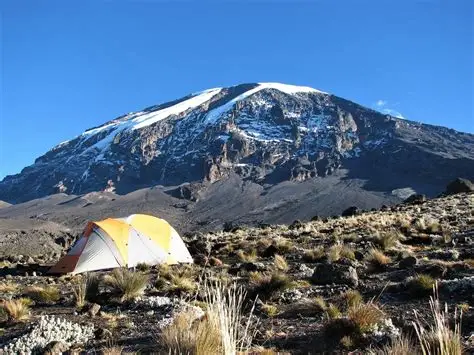
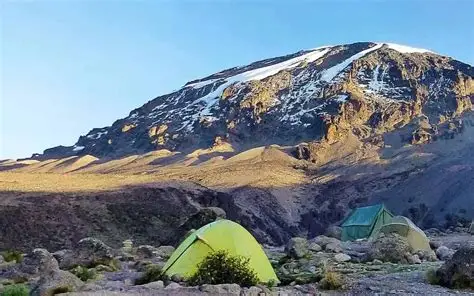
Beyond Mandara, the forest gradually gives way to heath and moorland. The landscape becomes more open, with views towards Kilimanjaro’s peaks as the trail continues to Horombo Hut.
Some itineraries allow time to visit Maundi Crater or explore the area around Horombo.
Cross the alpine desert
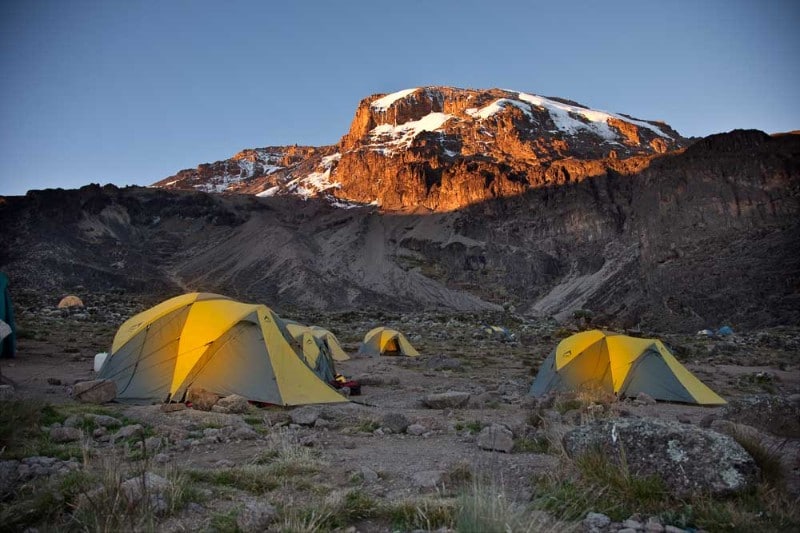
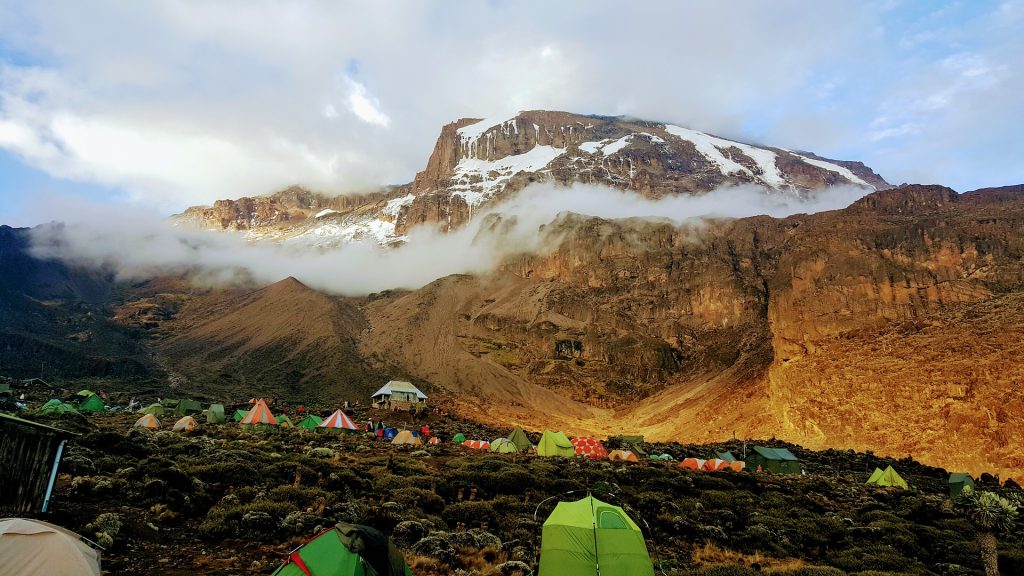
The trail continues towards Kibo Hut across the high-altitude Saddle between Kibo and Mawenzi. Vegetation becomes sparse, the landscape more exposed and temperatures can drop considerably.
Kibo Hut is the final overnight stop before the standard summit attempt.
Approach the crater rim
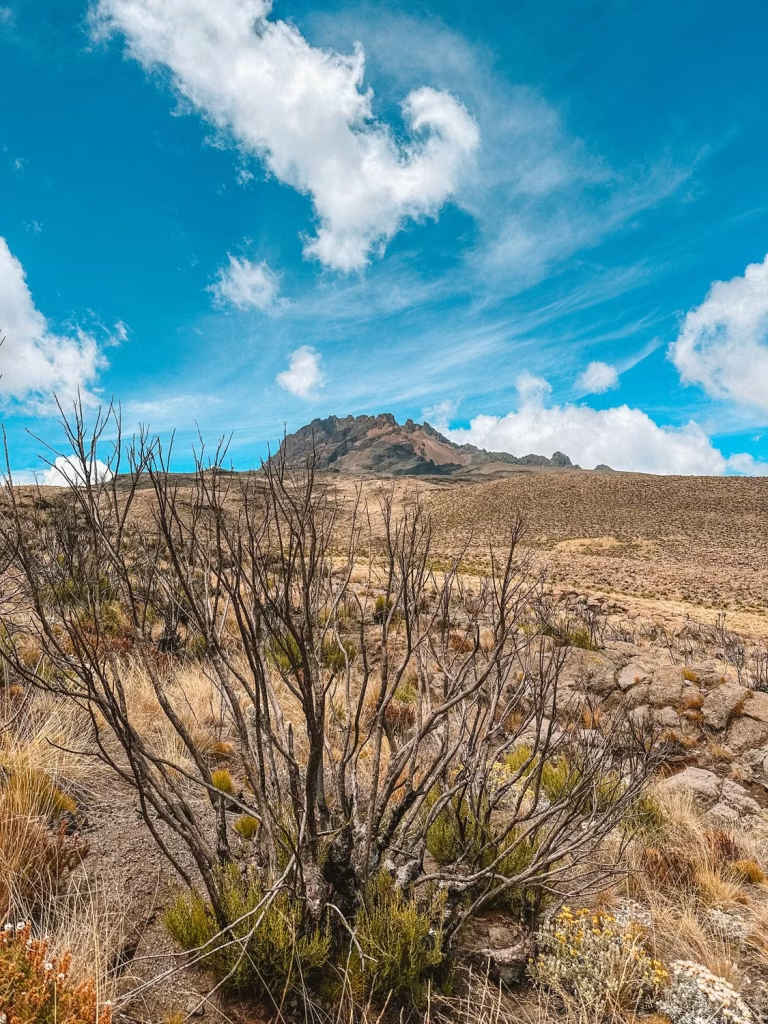
The summit climb commonly begins around midnight or during the early hours. Climbers ascend towards Gilman’s Point on the crater rim. Those continuing to Uhuru Peak follow the rim past Stella Point before reaching the summit.
This is a long and physically demanding stage, made more challenging by altitude and cold.
Return along the same trail
After the summit attempt, climbers descend towards Kibo Hut and Horombo Hut according to the itinerary, then retrace the trail towards Mandara Hut and Marangu Gate.
The return journey offers another look at the changing mountain landscapes, but much of the route is familiar because the same main trail is used in both directions.
THE ROUTE
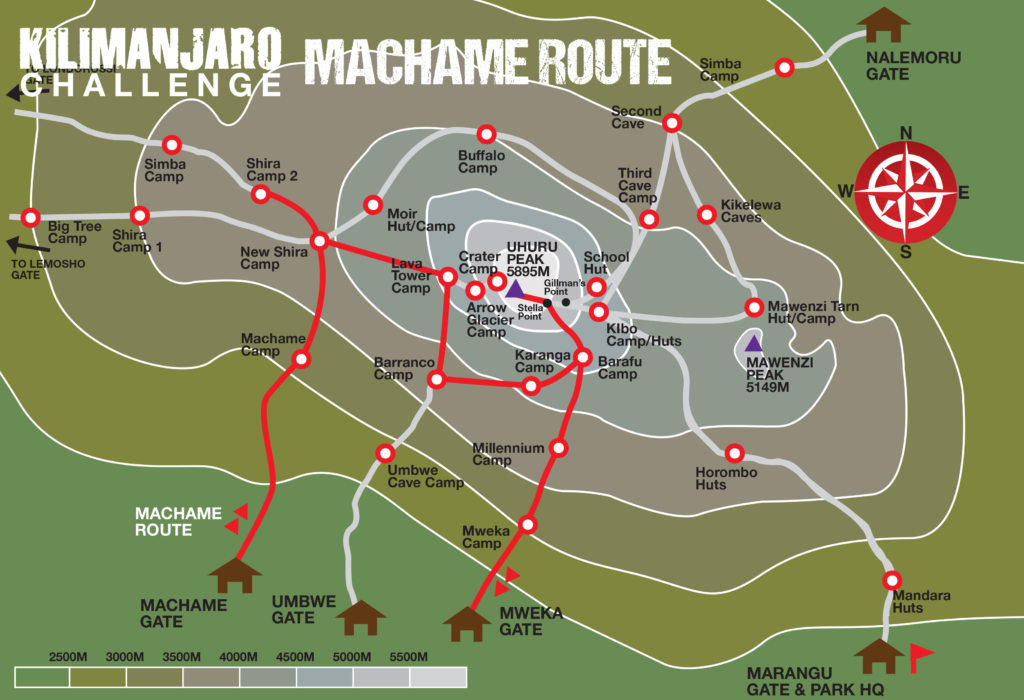
Marangu Route map
The Marangu Route begins at Marangu Gate on Kilimanjaro’s southeastern side and follows a single main trail through the mountain’s vegetation zones towards the summit.
Main route sequence
Marangu Gate → Mandara Hut → Horombo Hut → Kibo Hut → Gilman’s Point → Stella Point → Uhuru Peak.
The descent follows the same main route back through Kibo Hut, Horombo Hut and Mandara Hut to Marangu Gate. Overnight stops on the descent depend on the itinerary.
The 6-day version commonly includes an additional acclimatisation day at Horombo Hut before continuing to Kibo Hut.
BEFORE YOU GO
Difficulty, Altitude and Preparation
Climbing Kilimanjaro is a demanding physical undertaking. The Marangu Route does not normally require technical mountaineering skills, but it requires sustained walking, preparation and the ability to cope with high altitude. The hut accommodation provides shelter, but it does not reduce the physiological effects of altitude.
Altitude
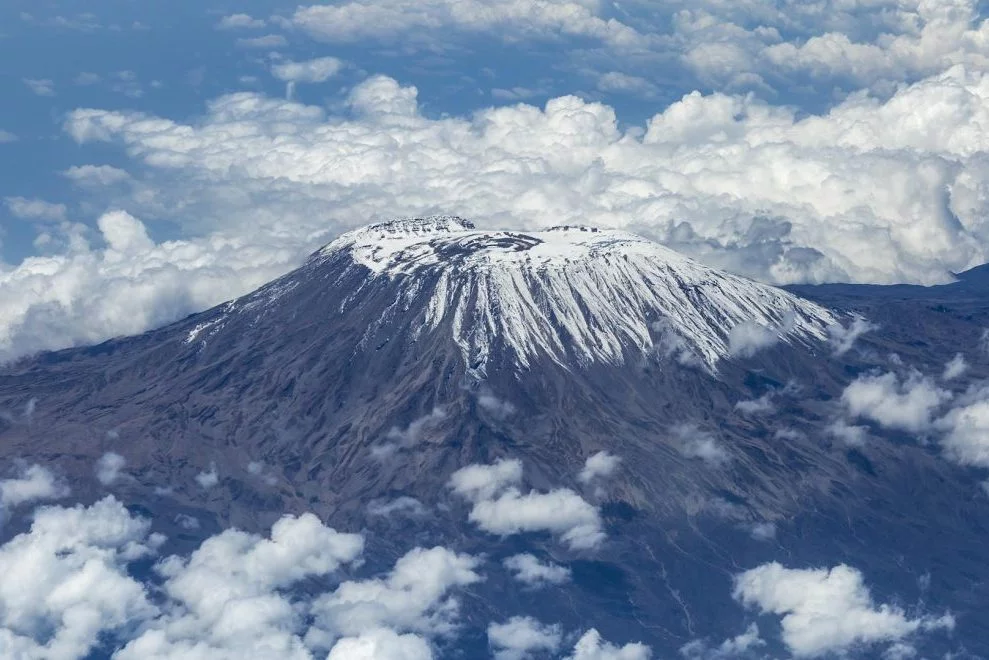
Uhuru Peak stands at 5,895 metres above sea level. At these elevations, the reduced availability of oxygen can affect anyone, regardless of fitness.
The route climbs from Marangu Gate to Mandara Hut, Horombo Hut and Kibo Hut before the summit attempt. The 5-day itinerary follows a faster ascent schedule, while the commonly offered 6-day itinerary adds an acclimatisation day at Horombo.
A carefully paced itinerary and time to acclimatise are important, but altitude illness remains possible. Discuss altitude risks and preventive measures with a qualified healthcare professional before your climb.
Physical preparation
Prepare with regular walking and progressively longer hikes, including uphill and downhill terrain. Cardiovascular exercise, leg strength and practice walking for several consecutive days can help you prepare for the physical demands.
Practice with the footwear, clothing and daypack you intend to use on the mountain. Although the Marangu trail is established, the higher sections are demanding, and the summit attempt requires considerable endurance.
Summit night
The summit attempt commonly starts around midnight or in the early hours of the morning. Expect cold conditions, a prolonged ascent and a lengthy descent.
From Kibo Hut, climbers ascend towards Gilman’s Point on the crater rim. The route then continues past Stella Point to Uhuru Peak for those who are able to proceed. The descent back towards Horombo is long, so climbers should be prepared for a demanding day.
Rest, suitable clothing, hydration and following your guides’ instructions are important.
Guide support and safety
Climb with a properly organized guiding team that monitors climbers and knows how to recognize altitude illness. If symptoms develop or worsen, tell your guide immediately. A safe descent may be necessary even if it means stopping short of the summit.
What's Included in Your Marangu Climb?
A Kilimanjaro climb involves more than the trail itself. Before booking, understand which services your package covers and which expenses you need to arrange separately.
Your Marangu package details should clearly explain:
- Mountain guides and supporting crew
- Required park and hut fees
- Meals and drinking water on the mountain
- Pre-climb briefing and route preparation
- Transfers to and from the trail, where included
- Accommodation in designated mountain huts
- Personal equipment, tips, travel insurance and other exclusions
Plan your Marangu climb
Tell us when you would like to climb, how many people are travelling and which itinerary you are considering. We can then discuss availability, package details and the arrangements for your trip.
Marangu Route FAQs
Get To Understand What Most Travelers Ask About This Route