YOUR KILIMANJARO PLANNING GUIDE
Choosing & Booking Your Kilimanjaro Climb
Planning a Kilimanjaro climb starts long before you reach the mountain. You need to choose a route, allow enough time for acclimatisation, understand the costs and decide how you want to climb.
Plan Your Kilimanjaro Climb With Confidence
You do not need to know every detail before making an enquiry. Start with your preferred travel dates, available time, group size and expectations.
We’ll use those details to help you explore suitable routes, compare the available itineraries and understand the next steps.
Step 1 — Choose your route
Explore the seven routes and compare scenery, terrain, accommodation and itinerary length.
Step 2 — Choose your climbing duration
Look beyond the number of days and review the route schedule, sleeping elevations and acclimatization opportunities.
Step 3 — Decide between group and private climbing
Consider your budget, preferred dates, flexibility and the kind of experience you want.
Step 4 — Review the costs
Understand the package price, inclusions, exclusions, tipping expectations and other expenses.
Step 5 — Confirm your booking
Review your written itinerary, payment schedule, cancellation policy and any conditions before paying.
Step 6 — Prepare for departure
Once your booking is confirmed, organise travel documents, insurance, equipment and any necessary pre-climb arrangements.
Start With the Route That Fits Your Plans
Kilimanjaro has seven commonly discussed main routes: Marangu, Machame, Lemosho, Shira, Rongai, Umbwe and the Northern Circuit.
Each follows a different approach and offers its own combination of scenery, terrain, accommodation and trekking duration. The right route is not necessarily the shortest or most popular. It is the one whose itinerary and demands fit your circumstances.
Questions to consider before choosing
How much time can you spend on the mountain?
Your available time helps narrow the options, but avoid choosing solely by the shortest itinerary. Allow for travel to Tanzania, preparation, the climb itself and recovery after leaving the mountain.
What kind of scenery interests you?
You might prefer forest trails, the open Shira Plateau, the northern slopes or a route with a varied journey across the mountain. Explore the individual route pages to understand what each approach offers.
How important is acclimatization to your decision?
Altitude affects climbers differently, regardless of fitness. Compare sleeping elevations, daily ascent and descent, and the time built into each itinerary for acclimatization.
What accommodation do you prefer?
Marangu is known for its mountain huts. The other standard routes generally use camping. Ask what equipment is provided and what you need to bring or rent.
What is your trekking experience?
Consider how comfortable you are with consecutive days of uphill and downhill walking, camping, cold weather and long trekking days. Be honest about your preparation and discuss concerns with the operator.
DURATION MATTERS
Mountain Days: How Long Should Your Climb Be?
Kilimanjaro itineraries commonly range from around five to nine days on the mountain, depending on the route and package. Some routes have several itinerary options, and operators may count trip days differently.
A shorter climb may suit a limited travel schedule, but it can also involve more rapid elevation gain and less time for acclimatisation. A longer itinerary may provide additional time to adjust, depending on its actual design.
What should you compare?
- Daily elevation changes
- Acclimatization opportunities
- Daily walking demands
- Rest and recovery
Mountain days versus total trip days
The advertised climbing duration may not include all the days you need in Tanzania.
Your complete trip may also require:
- Arrival and transfer to your hotel.
- A pre-climb briefing and equipment checks.
- An overnight stay before the climb.
- A recovery night after the descent.
- Departure transfers and your international flight.
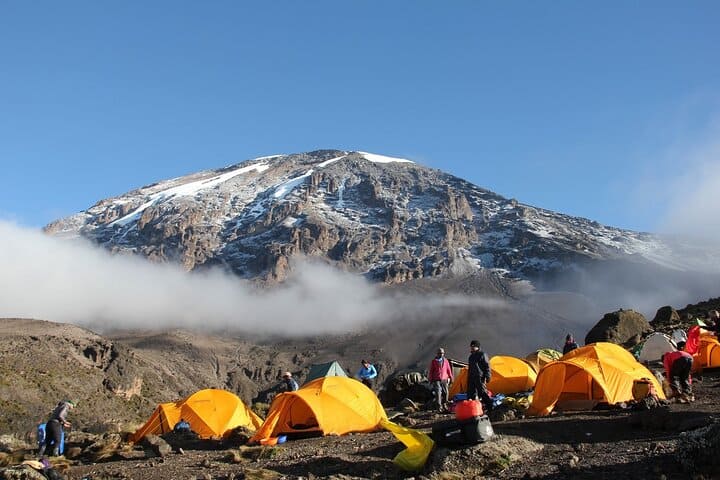
UNDERSTAND THE DIFFERENCES
What Makes One Kilimanjaro Route Different From Another?
The route affects more than the view from the trail. It determines your approach to the mountain, the terrain you cross, where you sleep and how your climbing days are arranged.
01 / SCENE
Scenery
Kilimanjaro’s environment changes as you gain elevation, from forest and moorland to exposed alpine terrain. Routes approach the mountain from different directions and offer different perspectives along the way.
Choose a route whose overall journey appeals to you, rather than judging it by one photograph or viewpoint.
02 /Terrain
Terrain
Some routes have steep early sections, while others involve longer traverses, open plateaus or substantial days of walking. Every standard trekking route still requires physical preparation and a demanding summit attempt.
Ask the operator what the daily walking entails and whether any sections need particular care or confidence on uneven ground.
03 / Accomodation
Accommodation
Marangu is known for permanent mountain huts. The other standard routes generally use tents at established camps.
Confirm whether the package supplies tents, sleeping arrangements, sleeping mats and other equipment. Ask separately about hotel accommodation before or after the climb, as this may not be included.
03 /Acclimatization
Acclimatization
Marangu is known for permanent mountain huts. The other standard routes generally use tents at established camps.
Confirm whether the package supplies tents, sleeping arrangements, sleeping mats and other equipment. Ask separately about hotel accommodation before or after the climb, as this may not be included.
CHOOSE YOUR CLIMBING ARRANGEMENT
Which Type of Climb Is Right for You?
Group and private climbs can offer different advantages. The right choice depends on your budget, travel dates, group size and how much flexibility you want.
SHARE THE JOURNEY
GROUP CLIMBS
Share the mountain experience with other trekkers on a scheduled departure. Ask about available dates, routes, group sizes, and how joining a group works.
Potential advantages
- An opportunity to share the experience with other climbers.
- A published departure date, where available.
- The possibility of a lower per-person price than a private arrangement.
Things to consider
- You may have less flexibility over dates and itinerary changes.
- The group follows the agreed schedule and group arrangements
- Departure availability and minimum group requirements may apply.
YOUR OWN TEAM
PRIVATE CLIMBS
Plan a climb with your partner, family, friends, or a private group. Discuss your preferred dates, route, and trip length to shape an itinerary around your group.
Potential advantages
- Greater control over your preferred departure date, subject to availability.
- An arrangement tailored to your own party and agreed itinerary.
- A more private experience for couples, families, friends or organisations.
Things to consider:
- The total package cost may be higher per person, especially for small parties.
- Changes still depend on route rules, permits, logistics and operator approval.
- A private climb does not remove the physical demands or risks of high altitude.
Planning a Kilimanjaro Climb as a Solo Traveller
Travelling alone does not necessarily mean you have to book a private climb. Depending on operator availability, you may be able to join a scheduled group or arrange a private climb for yourself.
Joining a group as a solo traveler
A group departure can be an option if the route, dates and booking conditions suit you. You may share the trek with other travellers while following the same agreed itinerary.
Before booking, confirm whether the departure is guaranteed, whether any minimum number of participants applies and whether a single-traveller supplement is charged.
Booking a private climb
A private arrangement may suit you if you want to choose your own departure date or prefer not to join an open group.
Ask how the price is calculated for one person, what support is included and whether your preferred itinerary is available.
What Does It Cost to Climb Kilimanjaro?
The price of a Kilimanjaro climb depends on the route, number of days, group size, accommodation arrangements, logistics and services included in the package.
A shorter itinerary is not automatically the best value. Compare what you receive, how the climb is organised and which expenses you will need to cover separately.
INFLUENCES
What influences the price?
ROUTE
Route and duration
Additional days on the mountain can increase camping, meals, crew and logistical costs. Different approaches may also involve different transport arrangements.
GROUP SIZE
Group size and climbing arrangement
A group departure may spread some costs across multiple travellers. A private climb can provide a different level of flexibility, but its price depends on the number of participants and operator arrangements.
PARK
Park fees and required permits
These are important components of a properly organiZed climb. Ask how the package accounts for the applicable fees.
SLEEP
Accommodation and transport
Check whether airport transfers, hotel nights, mountain transfers and equipment arrangements are included.
TOOLS
Equipment and additional services
Equipment rental, hotel upgrades and other optional services may affect your final budget.Ask for a detailed quote
KNOW WHAT YOU ARE PAYING FOR
Review the Package Before You Book
Two Kilimanjaro packages can have different prices because they include different services. Review the written quotation rather than comparing headline prices alone.
Common inclusions may include
- Required park fees and permits.
- Professional mountain guides and support crew.
- Mountain meals and drinking-water arrangements.
- Tents or hut accommodation on the mountain, as applicable.
- Porter support within applicable load limits.
- Transfers to and from the mountain trailheads.
- A pre-climb briefing and equipment checks.
- Emergency and rescue arrangements specified by the operator.
Common exclusions may include
- International flights and visa fees..
- Travel insurance that covers high-altitude trekking and evacuation.
- Hotel accommodation before or after the climb.
- Personal trekking clothing and equipment.
- Equipment rental not included in the quotation.
- Tips for guides, cooks and porters.
- Personal expenses and any optional services.
- Additional costs arising from itinerary changes or services outside the agreed package, as specified in the terms.
How to Book Your Kilimanjaro Climb
The booking process should be clear from your first enquiry through to departure. Follow these steps to understand what happens next.
Step 1 — Send your enquiry
Tell us when you want to travel, which route interests you, how many people are travelling and whether you prefer a group or private climb.
You do not need to have every decision finalised. Let us know what you are considering and what questions you have.
Step 2 — Review your recommended itinerary
We will discuss the route options and available packages relevant to your request.
Review the itinerary carefully, including the camp sequence, daily walking plan, sleeping elevations, accommodation and total duration.
Step 3 — Receive and review your quotation
Your quotation should state the total cost, package inclusions and exclusions, payment terms and any applicable conditions.
Check that the dates, group size, route, itinerary and services match your expectations before proceeding.
Step 4 — Confirm the booking and pay the deposit
Once you are satisfied with the written proposal and booking terms, follow the operator’s instructions to confirm the reservation.
Pay the deposit only through an approved payment method, following the written instructions supplied by the operator. Ask for confirmation of the amount, currency, deadline and whether any transaction fees apply.
Step 5 — Receive your booking confirmation
Keep the written confirmation, receipt, agreed itinerary and payment records. Make sure you understand what is reserved, what remains to be paid and when the balance is due.
Step 6 — Prepare for departure
Confirm your travel arrangements, insurance, equipment, hotel plans and any required pre-climb steps.
Ask the operator when you should expect the final briefing and what documents or information you need to provide before arrival.
Cancellations, Refunds and Date Changes
Travel plans can change because of personal circumstances, flight changes or other unexpected events. Before paying a deposit, understand the operator’s rules for cancellation, refunds, date changes and changes to the agreed itinerary.
If you need to cancel
Review the cancellation deadline, any notice requirements and the amounts that may be refundable or retained under the booking terms.
Check whether deductions differ depending on when you cancel and whether non-refundable third-party costs have already been incurred.
Ask how the cancellation must be submitted and how any eligible refund is processed.
If you need to change your dates
Find out whether date changes are permitted, whether availability is required and whether a change fee or price difference may apply.
Ask whether a change affects permits, park arrangements, accommodation, transport or other services already booked.
Do not assume that a date change will be free or possible for every departure.
If the operator needs to change your itinerary
Ask how the operator handles changes caused by mountain conditions, park requirements, weather, safety concerns or service availability.
Your terms should explain how itinerary changes are communicated and what options may be available when the agreed arrangements cannot proceed as planned.
Safety-related decisions on the mountain must take priority over a planned schedule or summit attempt.
Protecting your trip
Before booking, consider travel insurance that specifically covers high-altitude trekking and medical evacuation. Read the policy carefully to confirm the activities, altitude limits and circumstances it covers.
Insurance does not replace the need to understand the operator’s terms.
Before paying: Obtain the operator’s current cancellation, refund and date-change policy in writing. Keep a copy with your booking confirmation.
KILIMANJARO CLIMBING FAQs
Find answers to common questions about choosing your climb, preparing for the mountain, and planning your trip.
How far in advance should I book Kilimanjaro?
The ideal lead time depends on your preferred dates, route, group size and availability. Contact the operator early if your travel window is fixed, and confirm availability before making non-refundable travel arrangements.
Can I book before choosing a route?
Yes, you can make an enquiry while you are still comparing options. Share your available dates, budget and preferred mountain experience so the operator can explain the suitable choices.
How many days does it take to climb Kilimanjaro?
Our route cards show typical mountain itineraries ranging from five to nine days. The exact duration depends on the route and itinerary. Allow additional time for arrival, departure, and hotel nights; compare the daily altitude profile as well as the number of days.
When is the best time to climb Kilimanjaro?
January to early March and late June to October are generally popular for drier conditions. Rain, snow, and cold weather remain possible throughout the year, so waterproof clothing and warm layers are necessary in every season.
Which Kilimanjaro route should I choose?
Choose according to your available time, hiking experience, accommodation preference, and acclimatisation needs. Compare the daily itinerary and sleeping elevations alongside the scenery. Share your priorities when enquiring so you can discuss suitable options.
How much does a Kilimanjaro tour cost?
The price depends on your route, mountain days, group size, service level, and inclusions. Request an itemised quote and confirm park fees, mountain accommodation, meals, transfers, and hotel nights. Also budget for flights, insurance, personal equipment, and crew tips.
Will I sleep in tents or mountain huts?
Marangu itineraries use shared mountain huts. The other routes shown above normally use camping accommodation. Confirm the sleeping arrangements and which tents, sleeping equipment, or rental items your specific package includes.
Can altitude sickness affect fit climbers?
Yes. Fitness does not prevent altitude illness. Ascend gradually and tell your guide promptly if you feel unwell. Do not continue higher with symptoms; worsening symptoms require descent and medical attention. Discuss individual health concerns with a travel-health professional before your trip.
READY TO PLAN YOUR KILIMANJARO CLIMB?
Tell us your preferred dates, group size, and the routes you’re considering. We’ll help you explore your options and request a personalised quote for your climb.